



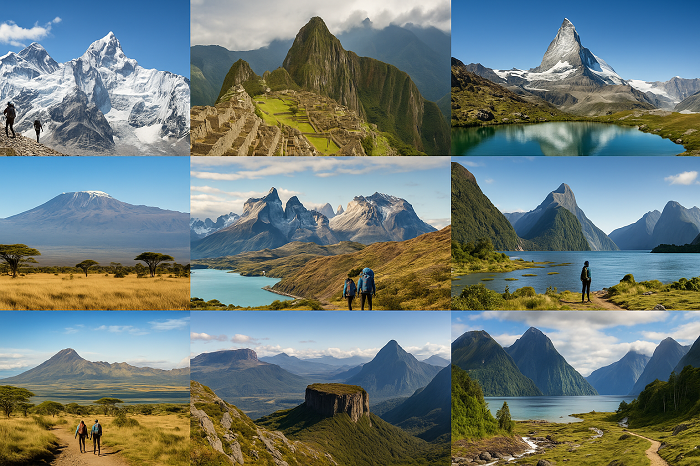
Exploring the world on foot through trekking is one of the most rewarding experiences for adventure enthusiasts. It allows travelers to connect with nature, challenge themselves physically, and witness breathtaking landscapes that can’t be reached by any vehicle. From snow-capped mountains and tropical forests to remote deserts and ancient trails, the world is filled with trekking routes that promise unforgettable journeys. In this comprehensive guide, we will explore the Top 10 Trekking Routes Around the World, covering what makes each one unique, what to expect, and why they deserve a spot on every traveler’s bucket list.
1. Everest Base Camp Trek, Nepal
The Everest Base Camp trek is the most iconic and celebrated trekking route in the world. Set in the heart of the Himalayas, this trail takes adventurers through remote Sherpa villages, Buddhist monasteries, and rugged mountain passes, leading up to the base of the world’s highest peak, Mount Everest. The journey typically lasts between 12 to 16 days, starting from Lukla and reaching an altitude of around 5,364 meters. The highlights include panoramic views of Everest, Lhotse, and Nuptse, along with a deep cultural immersion in Sherpa traditions. This trek is not only about conquering altitude but also about experiencing the spirit of the Himalayas.
2. Inca Trail to Machu Picchu, Peru
A trek rich in history and culture, the Inca Trail to Machu Picchu offers an unforgettable blend of scenic beauty and ancient mystery. This four-day trek follows the footsteps of the ancient Incas through cloud forests, mountain passes, and archaeological sites, culminating at the breathtaking Sun Gate overlooking the lost city of Machu Picchu. The route is moderate in difficulty and offers trekkers a chance to walk through history while surrounded by lush Andean landscapes. It’s a spiritual and physical journey that rewards travelers with one of the most magical sunrises in the world.
3. Annapurna Circuit, Nepal
The Annapurna Circuit is another Himalayan masterpiece that deserves global recognition. Stretching over 160 to 230 kilometers depending on the chosen route, this trek takes you through diverse landscapes ranging from subtropical forests and terraced farmlands to alpine deserts. The highlight is crossing the Thorong La Pass at 5,416 meters, which offers jaw-dropping panoramic views of the Annapurna and Dhaulagiri ranges. The cultural richness of the local Gurung and Thakali villages adds another layer of authenticity to the experience, making it one of the most enriching treks in Asia.
4. Kilimanjaro Trek, Tanzania
Mount Kilimanjaro, Africa’s highest peak, stands as a beacon for trekkers seeking a once-in-a-lifetime challenge. Unlike technical climbs, Kilimanjaro can be conquered by determined trekkers with proper preparation. The routes vary in difficulty, but the Machame and Lemosho routes are considered the most scenic. The journey takes trekkers through multiple ecosystems, from lush rainforests to arid alpine deserts, before reaching the icy summit at Uhuru Peak, standing 5,895 meters tall. The sense of accomplishment upon reaching “the roof of Africa” is unmatched.
5. Torres del Paine Circuit, Chile
Located in the stunning Patagonia region, the Torres del Paine Circuit in Chile is a paradise for outdoor lovers. This 8-10 day trek circles the iconic Torres del Paine National Park, featuring turquoise lakes, towering granite peaks, glaciers, and abundant wildlife such as guanacos and condors. The weather is unpredictable, adding to the adventure, but the pristine beauty of the region makes every step worthwhile. Trekkers can also opt for the shorter “W Trek,” which covers the park’s most famous viewpoints.
6. The Haute Route, France to Switzerland
For those who love European landscapes, the Haute Route offers a spectacular trek connecting Chamonix in France to Zermatt in Switzerland. This two-week journey covers some of the most beautiful alpine scenery in the world, with views of Mont Blanc and the Matterhorn along the way. The route combines scenic villages, lush meadows, and challenging mountain passes. Trekkers can choose between the classic summer route or the ski touring version during winter, both offering equally stunning vistas.
7. Milford Track, New Zealand
Often described as “the finest walk in the world,” the Milford Track in New Zealand’s Fiordland National Park offers 53 kilometers of pure natural beauty. The trail passes through lush rainforests, over suspension bridges, and alongside dramatic waterfalls like Sutherland Falls, one of the highest in the world. The well-maintained path, combined with the pristine environment, makes it accessible even for moderate trekkers. It’s a must-visit for those seeking serenity and immersion in untouched wilderness.
8. The Pacific Crest Trail, USA
Stretching from Mexico to Canada, the Pacific Crest Trail (PCT) is one of the longest and most diverse trekking routes in the world. Covering over 4,200 kilometers, it passes through California, Oregon, and Washington, traversing deserts, mountains, and forests. While few complete the entire trail, many adventurers choose to hike sections of it, each offering unique experiences. The PCT has gained global fame for its raw beauty, solitude, and connection to nature, immortalized in books and films like Wild.
9. Mount Roraima Trek, Venezuela, Brazil, and Guyana
Mount Roraima is a geological wonder and a dream trek for explorers seeking the extraordinary. This flat-topped mountain inspired Arthur Conan Doyle’s The Lost World and offers surreal landscapes with its mist-covered cliffs and alien-like flora. The trek typically takes six days, leading hikers through rainforests, river crossings, and steep ascents to reach the summit plateau, where unique rock formations and crystal-clear pools await. The view from the top, where three countries meet, is simply unforgettable.
10. The Laugavegur Trail, Iceland
Iceland’s Laugavegur Trail is an adventure through a landscape shaped by fire and ice. This 55-kilometer trail connects Landmannalaugar to Þórsmörk, showcasing colorful rhyolite mountains, steaming hot springs, black sand deserts, and glacial rivers. The trek takes about four days and offers an ever-changing panorama that feels otherworldly. Trekkers can also extend the journey to the Fimmvörðuháls Pass for an even more dramatic finish between two glaciers.
Conclusion
Trekking around the world is more than just a physical journey—it’s an exploration of cultures, ecosystems, and the limits of human endurance. Whether you’re standing beneath the towering peaks of the Himalayas, walking the sacred paths of the Andes, or crossing the windswept plains of Patagonia, every trail tells its own story. These top 10 trekking routes represent the best of global adventure travel, catering to both seasoned hikers and curious beginners. As you plan your next great expedition, remember to prepare well, respect nature, and embrace the journey as much as the destination.
Frequently Asked Questions (FAQs)
Q1. What is the best time of year to go trekking?
Answer. The best time depends on the location. For the Himalayas, March to May and September to November are ideal. For Patagonia, go between November and March. European routes are best in summer, while New Zealand’s season runs from October to April.
Q2. Do I need prior trekking experience for these routes?
Answer. Some routes, like the Inca Trail or Milford Track, are beginner-friendly, while others like the Everest Base Camp and Kilimanjaro require good fitness and acclimatization. Always research trail difficulty and train accordingly.
Q3. How can I prepare physically for trekking?
Answer. Start conditioning at least two months before your trek with cardio, strength training, and hiking practice. Focus on endurance and leg strength, as well as carrying a backpack comfortably.
Q4. Are guided treks necessary?
Answer. Guided treks are recommended for challenging routes like the Inca Trail and Kilimanjaro, where permits and logistics can be complex. However, experienced hikers may prefer solo treks in well-marked regions.
Q5. What should I pack for a multi-day trek?
Answer. Essential items include sturdy boots, layered clothing, waterproof gear, trekking poles, hydration systems, and high-energy snacks. Pack light but ensure safety and comfort.



Comments are closed